Countdown!

Countdown!

   It has actually happened. In the weeks since acquiring a so-called “smart” phone, time does seem to have condensed and almost a month has gone by since my last post. Truly a phenomenon of the modern world. Perhaps I have just been so fully immersed in the final phases of writing The Compassionate Equestrian with Dr. Schoen, that the early days of summer have already slipped by in a blink. I haven’t even been to a horse show yet this season, but I do plan on heading to Spruce Meadows sometime soon to catch up on the activities of some of my favorite jumpers.

   I also made a quick weekend trip to the extraordinary, famous retreat center in Big Sur, California, Esalen. This is a place where life-transforming “incidents” occur and one can release past traumas, move forward, and awaken to a world of self-advancement with renewed energy and purpose. I am learning to speak with the power and intent that drives The Compassionate Equestrian on its path to making the earth a better place for horses and their humans.

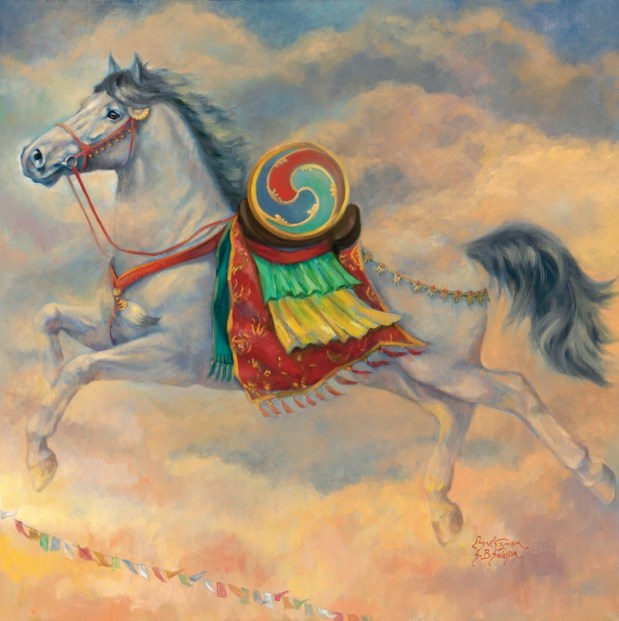
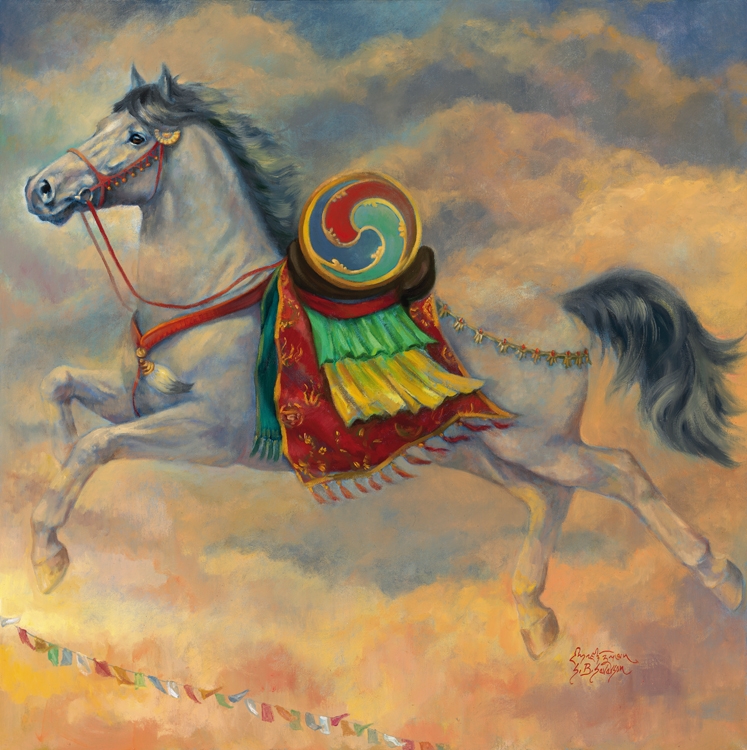
windhorse

(image: http://dungkarling.tripod.com/id7.html)

   Sadly, I have recently learned that one of my former riding students broke her back. I was on a trip to Arizona a few months ago, and while visiting my old barn, this very astute, lovely lady happened to stop by. She was thrilled to see me and excited to tell me about the new horse she had just purchased. The last time I had worked with her, several years ago, she was still on the longe line on a schoolmaster, slowly developing a correct seat. She had very little time to ride and was a long ways from riding independently, much less owning a horse.

   As happens far too many times, the horse she purchased this year was not suitable for her skill level. It was a gaited horse with a lot of forwards energy. In the story that was relayed to me by friends last week, the student had hired a trainer who insisted on using a noseband with spikes in it to control the horse.

   One day, while riding alone, the horse was spooked by a loose horse and the still-novice rider did what most riders would do in that instance, which is to grab at the reins to keep her horse from running off. Unfortunately the horse’s reaction was in response to the pain of the spiked noseband and it flipped over on its rider, causing the severe injury. Luckily, she is not paralyzed from the fall and will recover, but ultimately, such an accident can dramatically change a person’s life.

   It seems like every time I ride, go to a barn, speak with other riders or former clients, I am reminded as to why Dr. Schoen and I have written The Compassionate Equestrian. It seems like it cannot get out to the horse world fast enough.

   As it is, we have tremendous confidence in our wonderful publisher, Trafalgar Square Books, to produce a book we will be extremely pleased with, and one that we can send out on the back of the Windhorse with prayers and blessings for all equines and their people. For this generation, the next, and all to come, we wish for compassion to become the base of all training methods, for the benefit of all beings.

Condensing Time and Space

This is the new world. Nobody has time, and almost everybody is reading things in very small, narrow windows. We have condensed our world. Faster, smaller… better?

I was in an electronics store a short time ago and for the first time took a look at our blog and website on a smartphone screen. I’m a latecomer to the world of these devices, as I haven’t needed one, until now. Since we also have to travel lighter the power of the small screen decidedly trumps the necessity of packing a computer. In the world of condensed everything, even these two paragraphs are too long for most people. If you’ve been able to get this far – good for you!

When you squeeze text into a narrower window, obviously it makes the content appear much longer than it does on a wide-screen. So I’ve decided to try to make these posts shorter and sweeter so that everyone can get back to their busy-ness and other activities in due course.

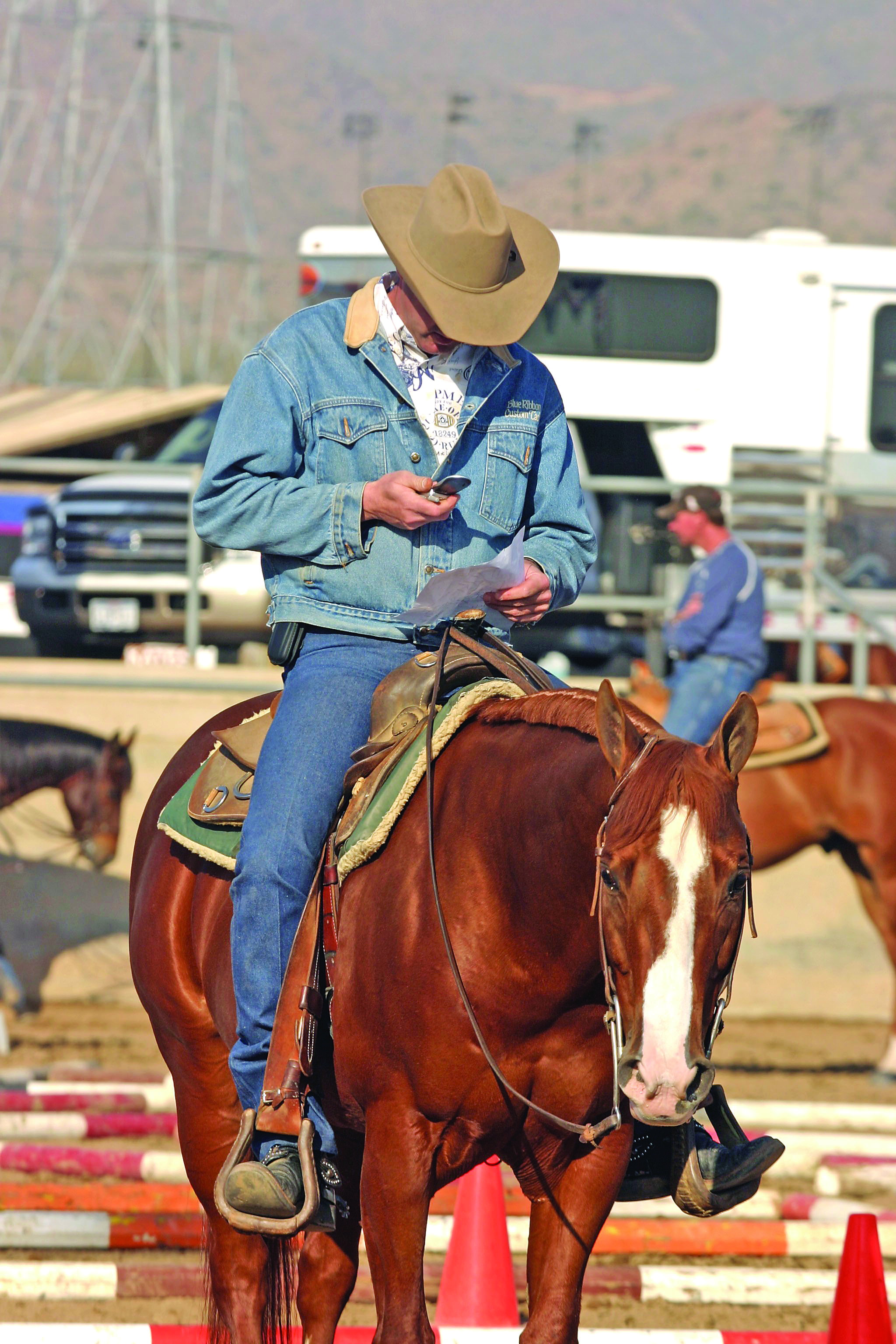
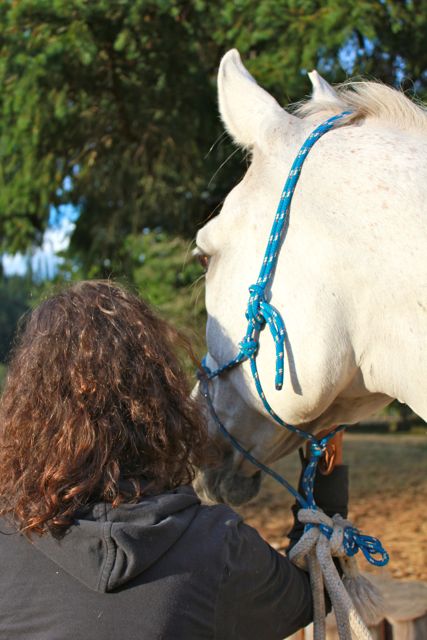
photo: americashorsedaily.com "Bad Warmup Behavior"

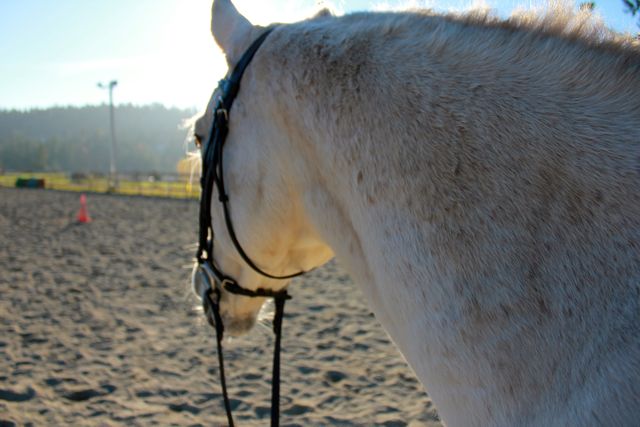
photo: americashorsedaily.com
“Bad Warmup Behavior”

What does this have to do with horses? Compassion?

I have seen the tiny electronic devices cause a considerable deflection from the intense focus that’s required to school a horse correctly. I’m old enough to have comparative values of the pre-cellphone and post-cellphone worlds. When my teenage students first started showing up at the barns sporting their new e-toys, I could sense  trouble was brewing. I knew what was coming down the high-tech pipelines too as I actually lived in a computer lab that was full of engineers and programmers developing this stuff. Nobody figured teenagers would be the first demographic addicted to tiny phones.

I will never forget the sight of one of the younger girls who was on her new 17.2 h.h. off-track thoroughbred for the first time. I was waiting in the arena for her to start her lesson and couldn’t figure out why the horse was drifting well away from the in-gate. Then I noticed the reins were on the buckle. No, wait. Not even on the buckle, they were dropped on the big gelding’s neck. The young rider had her head down, both hands on her phone, texting. The horse had no idea where he was supposed to go.

It wasn’t long before the lure of the e-device became far more important than the horse, who soon after began to act out on all the issues that come with an ex-racehorse. He ended up standing in his paddock for the next two years while the girl’s grandmother did her best to care for the high-energy thoroughbred, as none of the other kids had the patience for him either.

Everybody had to get back to their phone calls and texts.

It’s not going to get any better, I’m afraid. Not unless more people decide that it simply isn’t being mindful or compassionate to our horses as distracted humans carry on in this faster, smaller, (better?) world of narrow windows, too much to do, too much traffic, rising costs of everything, complex data plans, endless passwords, typing, typing and more typing (with thumbs, no less), and having to get information across in smaller and smaller chunks. How does anybody learn anything this way? How in the world did we all end up with so much to do and no time to do it? The mind is just too packed with fragmented bits of information to be focused…

…and riding a horse really well requires focus. Otherwise, somebody gets hurt, or somebody (usually the horse) IS hurting, and it goes unnoticed – because the mind is elsewhere – or the rider is in such a rush to get in and out of the barn that something else in the horse’s training goes amiss.

Obviously, I haven’t done a very good job of condensing this post either! So if you’ve also had the time to read this far – good for you again!

The only answer I can see – and Dr. Schoen has spoken about this many times and puts it into practice daily – is that we have to take control of our mind-space and consciously retrain, or re-wire, our thinking to where we can be more mindful. Being mindful means being more compassionate as with that clearer, calmer focus, it’s much easier to notice if somebody, especially our silent horse, is actually suffering in some way.

If you have patiently scrolled all the way through this post, thank you! Apparently I still have a lot to say about things – maybe too much – but in a very condensed conclusion, all I have to say is, when I finally get my first smartphone next week, I hope I’ll remember to put it down when necessary, look up and around and acknowledge everybody and everything that needs some attention and real human contact.

As the Barn Turns

We all have our stories about “barn drama”. No matter what breed, what discipline, or what type of facility you board your horse at, there will be drama.

A recent article in the Wall Street Journal spelled out just how bad things can get:

Horse therapy (photo www.yourhorse.co.uk)

Horse therapy
(photo http://www.yourhorse.co.uk)

‘Barn Drama’ Puts Riders on Their High Horses
People Who Board Horses Know That Misbehavior by Human Owners Is Common Hazard

by Lauren Lipton, April 13, 2014 http://www.wsjonline.com

Scot Gillies has a good idea of the kind of horse people who will fit in at Gryffindor Farm, the small barn he helps manage in Lexington, Ky. So his advertisements for new boarders spell it out in detail: Owners must be “laid-back,” “happy” and above all, “drama-free.”

In an example of ‘barn drama,’ an unknown culprit cut the tail of a prized stallion at a Kentucky horse show. Vicky Castegren
Mr. Gillies, a marketing consultant by day and a horse owner himself, says that during his 14 years in the equestrian world, “I’ve seen the full range of drama that is associated with horse people.”

A few categories of problematic individuals reign: There are overprotective owners who insist their animals be treated like porcelain figurines, and neglectful owners who never show up. There are “back seat riders,” as some call them, who love to criticize other people’s technique. Some freak out over a stray wisp of hay in the barn aisle; others let their animals leave unwanted souvenirs…

I’ve been on both sides of the fence myself, as a boarder and managing a boarding barn. From a small backyard operation of a couple of horses to one of the most famous show-jumping facilities in the world. I could write an entire book on this topic alone.

We all know this kind of “stuff” happens all the time at barns so why does it continue? Can’t we be civilized enough to allow our fellow horse-people to enjoy their mounts and their time at the barn without the concerns of being criticized, harassed, bullied, insulted, or even robbed? Where is the compassion for other humans amongst human horse owners?

Are horse-people just an inherently nasty personality type who can’t resist the chance to flaunt their “superior knowledge” at every chance? Sometimes one has to wonder…

The setup of a boarding barn almost guarantees unstable behavior: Take a group of passionate, opinionated individualists. (Riding, a solo activity, doesn’t attract “team players.”) Give them a consuming hobby centered on a delicate, expensive living creature. Put them in close quarters, often with children and dogs that run amok, spooking the horses, and let the backbiting begin.

Yikes. That doesn’t make us look too good as a subset of society does it?

I wonder if it’s just that horses bring up the deepest part of ourselves, perhaps even mirroring our most repressed fears and long-buried personality traits that we ourselves are surprised to discover when they surface. I can remember many incidents over the years, even going back to my teens, where being around horses made me more reactive and opinionated around people than usual. In fact, I was pretty shy and reclusive around people, even quite nervous, when I didn’t have a horse nearby to “cover” for me. There is definitely new research emerging that confirms a neurobiological basis to our interactions and behaviors between species.

At horse barns I’ve found most people only get to know each other as they relate to their horses and their specific activity at the barn. We don’t get to know each other well and so there may be assumptions made about others causing us to form opinions about them that are untrue or incomplete. This can cause rifts amongst people who might become friendlier if they understood each other a little better. Some riders may form more lasting or bonding friendships and enjoy great camaraderie, but it always seems to split into “cliques”, just like high school. This seems especially true if there’s multiple disciplines involved at the barn:

Some barns attract more drama than others. High-end facilities with riders who compete on the show circuit in events like jumping and dressage can be hotbeds of jealousy; trail-rider barns are said to be easier-going. A mix of disciplines and levels, from serious equestrians to children taking lessons, can make problems worse.

“The minute you start mixing the hunter-jumpers with the dressage people with the Western pleasure people, that is like drama times three,” says Macala Wright, who boards her two horses in a facility that also includes a nonprofit equestrian-therapy group.

“The affluent people look down on the everyday horse owners. The dressage people don’t like the hunters, and every group looks down on the nonprofits,” says Ms. Wright, a Los Angeles branding consultant who has shuttled one of her horses through four barns in two years. At the second, which catered mostly to wealthy riders, “People would comment, ‘Oh, your dressage saddle isn’t very good quality,’ ” recalls Ms. Wright.

Something seems to be missing. Perhaps that would be “compassion,”  – the desire to relieve the suffering of another. Given the scenarios mentioned in this article, it would appear that compassion for others, and even other people’s horses, is sadly absent. I wonder if it’s possible to create a barn with a boarding contract that spells out something more profound than a “no drama” clause…

The best defense against drama may be a no-nonsense management style. “Three strikes and you’re out!” works for Donna Hyde, who juggles 22 horses, 18 boarders and disciplines including therapeutic riding, Western dressage and trail riding at her Norco, Calif., facility.

It’s an unfortunate commentary on the business when a barn manager has to constantly be on the defence for bad behavior. It just makes the barn manager appear to be angry or potentially angry much of the time too. In fact, if they’re dealing with or perpetuating the drama themselves, they may actually be angry! The attitude from the top-down affects everyone at the barn, including the horses.

By the time a boarder has reached the “three strikes and you’re out!” order, they’ve usually already left a trail of destruction ranging from hurt feelings to causing others to leave the barn. You can end up losing a good client because of a disruptive one.

Our answer with The Compassionate Equestrian is to create a new paradigm for horse-people and the equine industry that will allow a barn to follow the program Dr. Schoen and I have been working on. Its principles are designed to encourage the development of self-compassion, compassion for horses, and for all beings. There will eventually be a database of compassionate barns and trainers who will be doing their best to ensure everyone under their care and management is mindful of others and coming from a place of compassionate awareness.

We believe that horse-people are highly influential in their communities, both in and outside of their equestrian activities. If we are known as a “hazard” to each other and noted as “unstable personalities” we are not setting a good example for others, and especially not for young people who need safe, happy environments in which to enjoy their horses. Nobody should ever have to arrive at their barn and be afraid of what negative things will be said or done to them or their horse.

Everyone has the capacity to become more compassionate, and it does take a conscious effort to maintain compassion when situations may become difficult. For the sake of our community, our horses, and peaceful interactions in our barns, it’s our wish that all horse-people consider the benefits of compassion and the extraordinary, broad-reaching impact it can have on our world, well beyond that of the barn.


The Benefits – or Not – of Freedom

Imagine the Earth before there were any countries or borders of any kind. No lines, no names of this or that, no maps, no fences… nothing. The only sounds were the sounds made by Nature. There was no “time” according to human parameters. Just the continuous, ever flowing cycles of life. All creatures were free to wander wherever they would, or could. They were unbound by man-made constraints and the defining qualities brought about by the human tendencies of wants, needs, and ownership.

We couldn’t leave well enough alone, could we? We had to make countries and borders then create weapons of war to protect the countries and make enemies of those from other places. Horses were captured and domesticated to assist humans in their pursuits to “divide and conquer”. Unwitting participants along our path of so-called civilization.

It’s almost like we’ve painted ourselves into a corner after centuries of nation-building and social development. Are we free or not free? We’re surrounded by borders and rules telling us where and when we can and cannot go to visit or live. What of all the animals we’ve domesticated and bred? If we and they have wonderful, fulfilling lives, should there be judgement placed on how such great societies have been created? What about the millions of people and animals who still suffer so greatly on this planet, with no freedom to escape bad situations? If we have compassion for all beings, how can we be at peace until all beings on Earth are at peace?

According to Professor Lori Gruen’s interesting viewpoint, there are serious ethical questions to be asked about keeping animals in cages… or in the case of horses, the reference would be to keeping them in stalls and barns as our “captives”.

http://www.psychologytoday.com/blog/animal-emotions/201404/the-ethics-captivity-new-book-covers-all-the-issues

“Though conditions of captivity vary widely for humans and for other animals, there are common ethical themes that imprisonment raises, including the value of liberty, the nature of autonomy, the meaning of dignity, and the impact of routine confinement on physical and psychological well-being.”

Now, imagine what the implications would be if everybody just quit riding their horses, opened all the stall doors and paddock fences and set them free. It’s likely chaos would ensue. Sure, they might run amok for awhile or stop by the neighbour’s apple trees but most would be right back at the barn doors at feeding time looking for their next meal. Some wouldn’t leave at all. A few might join the wild herds, as in the deserts of the American Southwest where the economic downturn really did lead some people to turn their show and companion horses loose to fend for themselves. Rescue operations bordering desert communities have found themselves with “strays” looking for food and water.  Domestic horses don’t do well on their own.

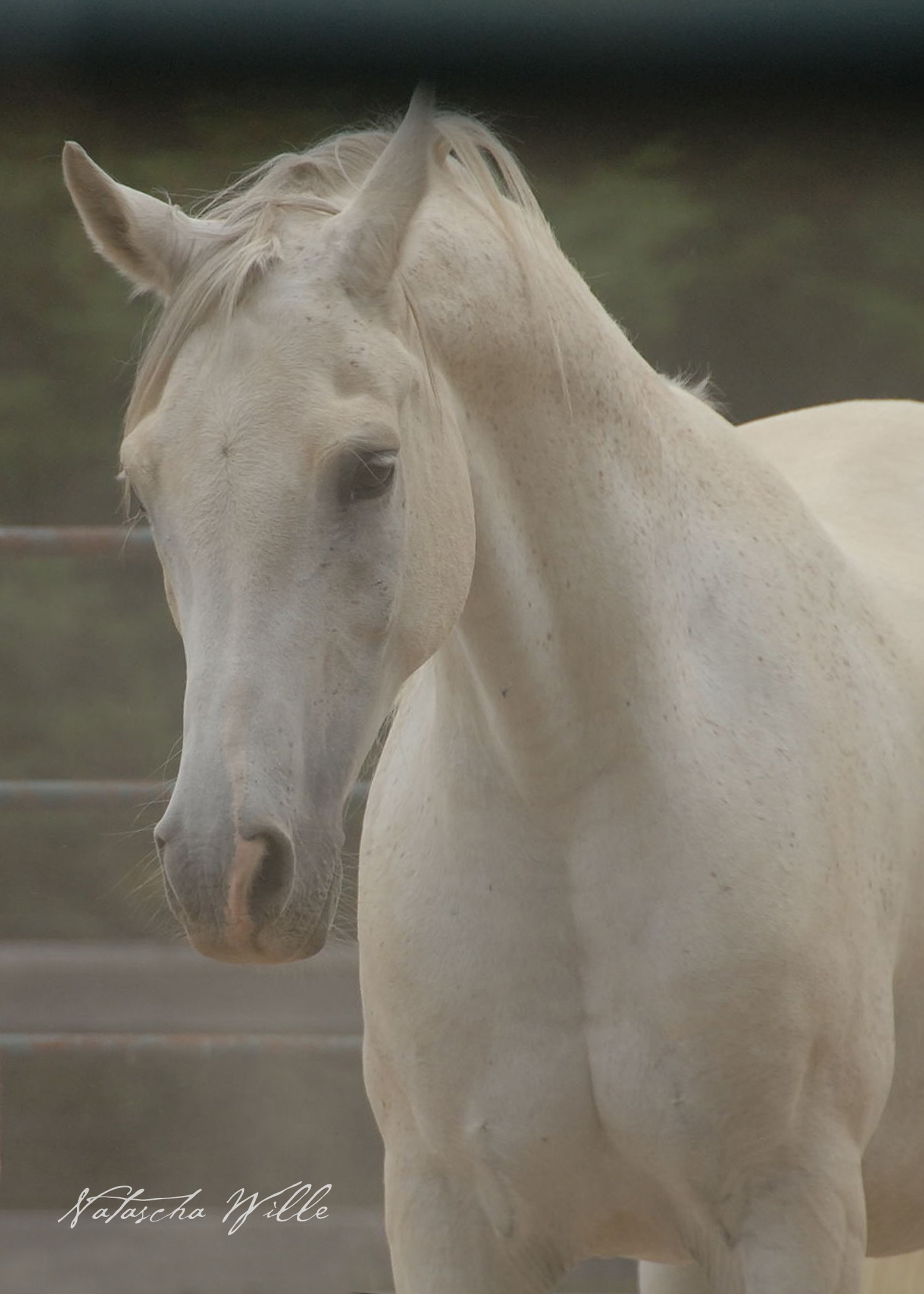
"Nick" - photo by Natascha Wille

“Nick” – photo by Natascha Wille

Let’s face it. Horses are big animals that leave a big hoofprint on the environment. In our “non-ideal” world as Dr. Gruen refers to, we have to “do the very best we can for them while their lives are compromised to various degrees in captive settings”.

Dr. Marc Bekoff, the writer of the article states, ” let’s hope that open discussion of the issues and the questions at hand, including what we know about the cognitive and emotional lives of animals and their capacity to suffer and to empathize with others, will work on behalf of those unfortunate billions of individuals who lives are a mess because of their confinement”.

So somewhere in the middle of “let’s turn all the horses loose” and “let’s keep them confined for our own pleasure and use” is the question “what is the most compassionate way to care for and interact with our horses?”

There is new, emerging research all the time that is telling us what causes distress to horses. We know for sure that ulcers are a man-made condition in equines, caused by stress placed on them due to excessive confinement, travel and showing. In our human rush to conquer and control everything, have we gone too far with horses and committed them to a lifestyle that is so unnatural for them that we’ve changed their genetic makeup? Probably. Is this bad? What have we done to other humans with such a mindset? Even in such things as personal relationships. Are we being compassionate to our partners when we hold them “captive” according to our wants, needs, schedules and whims?

Ah freedom. Look your horse in the eye and ask if he’d rather be turned loose to run and graze wherever he wants. No more grooming, hoof trimming, veterinary care, clean hay and water or forced exercise. Would he tilt his head like a curious puppy and ask “why”? Or would he immediately start nodding his head, pounding on the stall door with the enthusiasm of a football player charging into the opponent’s end zone for a touchdown? What would happen if you told your human partner or spouse they were free to go wherever they choose, whenever, and with whom?

My guess is the equine and human responses would vary, but most would fall somewhere in the middle of the extremes. Having compassion and wishing to alleviate another’s suffering means first of all, to be mindful of the fact that they’re suffering. Is your horse (or human partner) suffering in silence and you’re not seeing it? If you opened the door to set them free, would they go? Would they come back to you after realizing how kind and compassionate you were to them? Do they recognize freedom as being of benefit to them, or are they looking for the security of the home they’ve become so accustomed to and are willing to compromise their freedom to remain “captive” in a potentially less-than-ideal situation? These are the gists of the ethical questions posed by Dr.s Gruen and Bekoff.

Freedom is not about owning and controlling. Perhaps we need to consider that with our “captive” animals and being mindful as to how they are affected by confinement and the tasks we ask of them. Horses have evolved to fit with a domesticated lifestyle, as have humans, and many of the other pets we keep. Turning them all loose would not necessarily be conducive to their health and wellbeing. We all need to depend on each other for care and love, otherwise we lead a lonely and vulnerable life. The kindest approach of all is to acknowledge everyone as a free spirit, accepting who and what they are, with a compassionate heart and mind.


A Happy Horse, of Course!

We do everything else online these days so why not learn how to be happy by taking an online course too!? I had to think about this for a few days, and try to compute what “happy” really means. Especially to a horse. Does a horse think “happy thoughts”? I think with humans, part of the problem is we think too much. Part of being happy is to stop it. “Thinking” too much that is. At least so far as instructions in mind-training go as we are taught to let go of binding attachments to desires and things and just “be”. Yet even when taught to observe the mind as an instrument of desire, we still have wants and needs. It’s part of being human. It depends on what those wants and needs are. Do we want “stuff” or do we want to be of benefit to all beings?

For a horse to be happy, does he have to stop thinking or start thinking? Perhaps with animals, it’s simply a matter of how they respond in the moment as opposed to deciding how they will do everything from selecting a partner to where they will live and work and what they will acquire that will supposedly “make” them happy. They go about their horse-business and seem to be most at peace when they’re turned out in a pasture together and can function as closely to their natural herd behavior as much as possible.

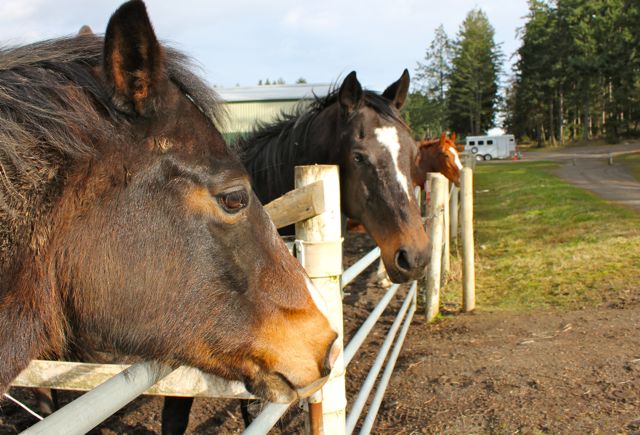
The "herd" waiting to be brought in for dinner.

The “herd” waiting to be brought in for dinner.

What’s interesting about the fundamental ideas behind the “happiness course” is that they sound a lot like the way a herd of horses naturally operates. “Strong social ties”. Check. “A sense of purpose or connection to the greater good”. Check. “Reading people’s emotions”. Oh yes, horses are really good at that too. Do they have compassion? Empathy? I believe many of us who have worked with horses a long time can cite stories of horses displaying all the qualities this course teaches us about being happy. How fascinating!

http://www.huffingtonpost.com/2014/04/23/why-thousands-of-people-a_n_5175603.html?utm_hp_ref=mostpopular

“The [course] starts with the idea that happiness and health are fundamentally about strong social connections and being immersed in a strong social community,” says Keltner, citing research that strong social ties can add years to your life. “We’re going to zero in on things that build strong social ties and communities — things like compassion, empathy, how to read people’s emotions, gratitude, charity, generosity and giving.”

The course emphasizes two main (scientifically-proven) keys to happiness: Strong social ties, and a sense of purpose or connection to the greater good.

Granted, the definition of true happiness can be somewhat broad-based and subjective. A quick online search for the definition provided this description:

hap·pi·ness
ˈhapēnis/
noun
the state of being happy.
“she struggled to find happiness in her life”
synonyms: pleasure, contentment, satisfaction, cheerfulness, merriment, gaiety, joy, joyfulness, joviality, jollity, glee, delight, good spirits, lightheartedness, well-being, enjoyment;

For horses, that could translate to the pleasure of eating a bucket full of tasty grain or taking off across the field, bucking and playing as a delighted free spirit with the rest of the herd. Sounds similar to what humans find satisfying and joyful. Eating, playing… it appears all beings might be looking for the same thing.

Can happiness-seeking take a wrong turn? I can see all the heads nodding now.

This goes back to our desire for self-satisfaction and thinking we’re going to find that either through others, or through the acquisition of material goods. It looks like the online happiness course is scientifically-backed to prove there are definitely errors made in human thinking as to what will make us happy.

I had a landlord once who lived right below my apartment. He and his girlfriend were generous, caring souls, but he was convinced she was supposed to “make him happy”. It’s a fragile way to maintain a human relationship. As soon as he was “unhappy” the arguments would ensue and it became an unpleasant environment not only for them as a couple, but for everyone else in the vicinity who was subjected to their unhappy behaviors. They would eventually make up and the entire cycle would start again.

Horses don’t seem to have these problems.

I’ve watched horses respond to other horses in distress many times. They don’t like it when a herd-member is in trouble or hurting, even if they only know the horse as a stable-mate who lives in another stall in the barn. They will exhibit signs of stress and call out to the distressed horse. Is this not a sign of compassion and empathy? I’ve seen an entire herd of pasture-mates form a procession and circle around one of their own who was dying. Is this not a sign of sentience, intelligence and compassion?

I believe that amongst domesticated horses, we humans are often thought of as part of their herd. Perhaps more so by some horses than others, but I’ve seen signs of acceptance in that regard as well. It’s probably why so many people feel so protective and emotionally attached to their horses. It’s hard not see them as objects of desire and “things” that exist to make us happy, but they are so much more than that.

As the happiness course indicates, the factors that make for true happiness are strong social circles and caring for others. So our real happiness with horses comes from that aspect of being with them, and not so much from the aspect of how much they cost, how much fancy tack we can dress them up with, or how many ribbons we can win in the show ring with them. All that “stuff” simply pales in light of the real reasons horses can bring us true happiness. No wonder they’re so inherently happy 🙂


How LIGHT Saved My Horse’s Life

In the late 1990s my aged Hanoverian gelding who had once been an upper-levels eventing horse and show jumper was retired to the job of a lesson horse.  Old injuries he’d sustained in his younger years as a competitive athlete were catching up with him and his level of discomfort increasing.  He had a large amount of scar tissue on the underside of his neck, bad hocks, spinal deformity and arthritic joints.  By the time he was essentially bracing himself on two legs and not wanting to roll any longer, my options for his care and comfort were diminishing.  I’d already rescued him from a trip to the slaughterhouse when he was 18, and was glad to have given him a good “second chance” in life and a far better ending than the one he’d been threatened with.  I thought maybe he’d reached “the end” for sure this time and was considering euthanasia.
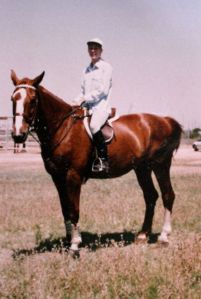
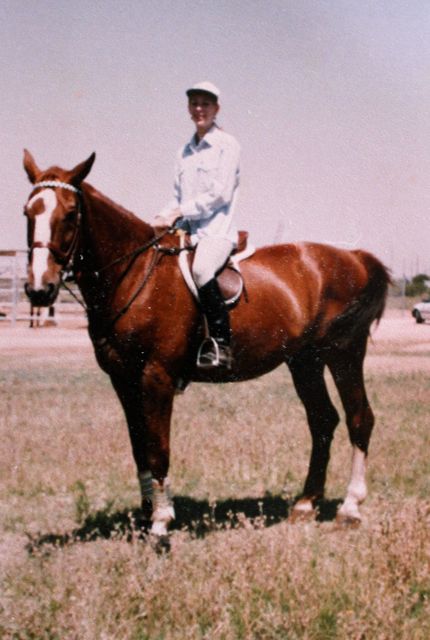
Willy & I

Willy & I

Given the results I’d seen with light therapy in humans and other animals however, I decided to give it a chance as a new company had emerged at the time with a system designed specifically for horses.

For some who may not have been introduced to Low Level Laser Therapy*, this might sound like it’s straight off the Holodeck of the Starship Enterprise.  I can assure you of the science behind it however, and will present both anecdotal accounts from my own experience with this remarkable healing modality as well as scientific references.  Oh yes, and if you search for the opinions that say it isn’t effective or that there isn’t supportive research, you’ll find them, and generally they stem from sources who don’t actually quote the lengthy list of well-funded studies that do prove the known mechanisms and successful case studies, in particular the currently FDA-approved monochromatic red wavelengths.  Everyone comes through their own belief systems, even scientists.  However, I’ve now used the technology for over 20 years and still use it to speed up the healing of sports injuries, wounds, and dental surgery.  Results are consistent with both humans and animals in my experience.

Some of the contemporary history leading to the FDA-approved research came through NASA and the University of Wisconsin’s Dr. Harry Whelan, M.D.:

http://spinoff.nasa.gov/Spinoff2005/hm_1.html

Dr. Harry Whelan, M.D., has been inducted into the NASA Space Technology Hall of Fame for his research into the use of near-infrared LEDs for wound healing and the treatment of brain tumors and neurofibromatosis:

http://www.mcw.edu/neurology/facult/HarryWhelan.htm

I was personally introduced to photo-therapy, or the application of colored light, via Dr. Jacob Liberman O.D., Ph.D, D.Sc. (hon), (author of Light; Medicine of the Future  http://www.jacobliberman.org/jacob/bio/).  He invited me to attend the annual conference and professional training session of the College of Syntonic Optometry in 1991.  I then experimented with the specific frequencies of visible light on myself, on waterfowl that were rescued from various states of illness and injury and brought to our ranch, as well as dogs, cats, horses and anyone who wanted to try it for themselves.  Over and over again the results were nothing short of miraculous.

The originator of syntonic phototherapy was Dr. Harry Riley Spitler, D.O.S., M.D., M.S. Ph.D who first published the Syntonic Principle in 1941.  Scientific research that began in the 1920s speculated that the power of light was primarily transmitted to the core of the human organism via the organ of sight – the eyes.  Dr. Spitler theorized in great detail the role of the eyes in phototransduction, as well as the role of light and color in total organismic function and development.  Most of his work has been scientifically validated, and that of the work of many others in the field.  Their collective bodies of work have formed the foundation for today’s most advanced approaches to light therapy.
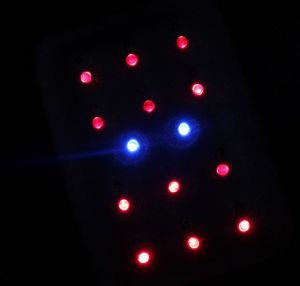
Glowing LEDs

Glowing LEDs

The issues up until the 1990s were conflicts between the FDA, DEA, and classifying both the devices and frequencies of light into their respective categories of drugs and medical devices.  It was NASA’s work in developing the technology with the Marshall Space Science Centre and Dr. Whelan that brought at least a portion of photonics research into the mainstream.

After I was trained in the application of colored light through the eyes, I made a set of filters and worked with those and a light source.  The technology that emerged at the time my Hanoverian, Wilhem, was literally on “his last legs” was that of BioScan Light, then out of New Mexico.  The application was quite different than what I had been taught, but understanding the mechanism of light on the cells of the body made me call a local woman who occasionally rode at our barn and had been through the BioScan training.  Desperate, I called her and had her come out to treat Willy.

http://youtu.be/mfueJv3OK9c

I found the scanning unit took quite a long time and when Sandra was finished the initial session, Willy had dots of grease pencil all over his body.  Then she treated each dot with a cluster-head set of red LED lights.  I noticed he immediately began taking deep breaths and almost fell asleep in the cross ties.  His whole body relaxed so much by the end of the session he looked like a different horse.  I was anxious to see how he moved.  His tail was up for the first time in quite awhile.  It had been clamped in chronic discomfort as his soundness deteriorated.  As it turned out, the old scar tissue under his neck had been causing him more pain than I’d originally thought too.

Conventional veterinary medicine had done all it could for this horse, saving his life when he was injured after flipping over a cross-country fence and splitting his neck near the jugular vein.  His hocks had been x-rayed, determining the condition they were in and finding a bone spur, and the farrier did everything he could to put a good, supportive foot under the big gelding’s aging body.  Everything else Willy needed, he got, but life had caught up with him and it was time to find an alternative and compassionate way to make him comfortable, or else let him end his life in peace.

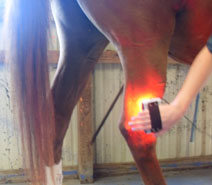
Applying red light with the Respond System.  www.emersonww.com

Applying red light with the Respond System. http://www.emersonww.com

After Willy’s first light treatment I put him back out to the pasture with the other old horses and he proudly marched to the middle of the field, stood up square like a statue, then took off in an elevated trot towards the horses.  I was amazed to say the least.  The other horses saw him coming and they all took off running too!

Sandra came back two more times and each time the number of grease-pencil dots from the Bio-Find unit decreased.  I noticed the old scar tissue softening under Willy’s neck.  The real test would come when I put him into one of the outdoor pens that he loved to roll in, but hadn’t done so in months.  I believe he thought he might not be able to get back up from the deep, soft dirt, once he got down into it for a roll.

Sure enough, after the final treatment I put Willy in the turnout and he immediately tossed a big hoof-full of dirt into the air.  That was the signal he was going to drop and roll.  He pretty much had a big grin on his face, as much as a horse can actually smile, then collapsed into the dirt and rolled, and rolled and rolled!  I knew from that point on he was going to be alright.

He stayed serviceably sound and remained bright and happy.  The other horses seemed to enjoy hanging around him more as well.  He even managed to commandeer two of them to swat flies from his face out in the pasture and his gentle nature made him a favourite for babysitting youngsters, sick horses and horses that needed to calm down.

I had an LED pad custom made and began to experiment on other horses, some with horrendous spinal deformities, dropped hips and sacroiliac displacement.  The results were consistent and every horse improved, some dramatically, even just using this very basic, simple version of light therapy.  It is a completely non-invasive, gentle method of remediation for injuries involving soft tissue and seems to help with joint stiffness as well as reducing the effects of old scar tissue.  I noticed the spine and hips realign, most likely due to the release of tightness and muscle damage that was pulling the musculoskeletal system out of alignment, allowing the bony structures to move back into a more normal state.  The horses all showed a marked increase in their ROM (range-of-motion).

In recent years, many new companies have emerged and new research and information continues to support the use of LLLT.  Dr. Schoen and I are looking forward to following the progress of the latest devices to enter the market for advanced and professional delivery of red light for the healing of horses.
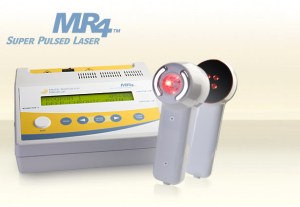
The MR4 Super Pulsed Laser

The MR4 Super Pulsed Laser

Dr. Schoen and myself both recommend a thorough veterinary workup if your horse exhibits signs of pain or lameness or is otherwise in apparent distress as there could be many causes.  A good lameness veterinarian is invaluable to every horse owner and sometimes they may recommend a second or third opinion also.  It isn’t unusual to find several causes of lameness in a horse and some are very difficult to diagnose.  As each practitioner comes from their own areas of expertise, you may find putting a good diagnostic team together the most compassionate thing to do for your horse’s wellbeing.  This includes a neurologic workup and checking for Lyme Disease if your horse’s behaviour has changed and he seems to have chronic, yet indeterminate symptoms of discomfort.

LLLT works wonderfully in conjunction with conventional medicine and is highly applicable as a supportive mechanism for speeding up healing along with standard protocols for treating sport-related injuries, wounds and post-surgical conditions.

_________________________________

*Laser Therapy is a form of phototherapy which involves the application of monochromatic light over biological tissue to elicit a biomodulative effect within that tissue.

Low-level Laser Therapy (LLLT) – the most widely-used name given to this form of photobiomodulation – can have both a photobiostimulative effect and a photobioinhibitive effect within the irradiated tissue – each of which can be used in a number of therapeutic applications.

source:  http://www.spectra-medics.com/llltinfo.html
Reading You Loud and Clear

A number of years ago I was attending a clinic at a barn in Wellington, Florida.  The instructor was one of the best professional dressage riders and trainers in the U.S., and the weekend clinic was based on her program for training the rider as an athlete.  I was impressed at not only her kindness and awareness of her horses and every subtle nuance of the ride, but how authentic she was with the attendees.  She immediately felt like a friend.

We weren’t riding that weekend, but horses and riders were used to demonstrate the principles of her program, which some of the ladies attending had apparently assumed they could be certified for.  As it was made clear to them during the final session of the workshop that further training outside of the equestrian field would be needed to qualify for certification in this particular program, tension began to rise in the group as the instructor was being challenged.

From where I was sitting I had full view of the barn with the horses that were there in training for the winter show season.  Having seen several in the arena over the two days I knew how calm and quiet they were and how beautifully cared for each horse was.  The entire row of about 5 or 6 horses had their heads out the back windows of the stalls, watching the discussion group with great interest and ears pricked.  They knew their rider was part of the group too and were fixated in the direction of her voice.

As the disgruntled attendees became angrier and their voices rose, I could see the other participants growing more tense and most certainly the instructor was trying to finish up a great weekend on a positive note.  At the same time I noticed the horses becoming restless as well.  One of them started weaving, slowly swaying from side-to-side in its stall.

The other horses who had been watching with ears pricked and pleasant expressions also became more agitated.  The weaver picked up his rhythm, while the others now had their ears back and were obviously getting upset, yet they remained fixated on the group.

I stopped listening to what was being said as it was becoming quite an argumentative discussion and focussed instead of the reaction of the horses, also noticing that nobody else seemed to be aware of the change in their behaviour.  I pointed it out to the lady who was sitting next to me.  I always like to have a witness to confirm what I’m seeing when it comes to determining more esoteric circumstances like this 😉

I felt sorry for the instructor as we had gotten friendly over the weekend and communicated via subtle cues that genuine horsemen use to signal each other that we’re on the same page.  Much like the horses were doing in picking up the emotions being relayed by the upset women towards the rider they knew well, and who probably rarely, if ever, radiated such energy towards them.

I sensed that this was an unusual situation for these horses and it fascinated me to see them go from so calm and soothed to being obviously distressed by what they were seeing… or hearing… or sensing… perhaps engaging all of their herd instincts in feeling the negativity directed at their “herd leader”.  Maybe they wanted to rescue her from the apparent danger, and then bolt to where it would be safe from the “predators”.

As the group began to disperse my friend showed up to drive us back to the hotel and I didn’t have the chance to talk further to the instructor or see how the horses were after everyone else was gone.  I did note the one being ridden in the arena had become quite spooky however and thought maybe it had also picked up on the other horses in the barn and their level of stress.

It confirmed for me that horses who have been conditioned to exist in the company of humans think of us like being in the company of their own wild herds.  It’s very important to them and reinforces how much of our energy they actually pick up on.  It should remind us to be as calm and stress-free as possible when we’re around them if we want them to be that way as well.  The Principles of Compassionate Equitation are a program of personal development that will lead the rider through a series of exercises and awarenesses that will help in this aspect of enjoying our own horses by calming ourselves and alleviating stress-related reactions, and becoming mindful of the “global herd” that needs attention, care, and compassion as well.

at home on Salt Spring Island, B.C.

at home on Salt Spring Island, B.C.

Welcome to The Compassionate Equestrian!

Susan Gordon and Dr. Allen Schoen DVM extend a warm welcome to everyone who wishes to make compassion a part of their equestrian lifestyle.  By following the program we have developed, you will obtain the ability to reach a new paradigm of caring and expanded awareness in your chosen training and handling methods.

Image

The Compassionate Equestrian is the forthcoming book and guide to a heart-centered, science-backed program for everyone who rides and handles horses. It is based on The 25 Principles of Compassionate Equitation outlining the most current, peer-reviewed research studies that identify and support methods of training, handling, and caring for horses that constitute a safe, healthy, non-stressful and pain-free environment for equines, while encouraging their human counterparts to approach their training and handling with compassion and a willingness to alleviate suffering not only for their horses and themselves, but for the benefit of all living beings.