THE SEASON FOR GIVING and LETTING GO

THE SEASON FOR GIVING and LETTING GO

Recently Dr. Schoen and I were discussing the concepts of “giving” and “letting go” and how they metaphorically apply to both our lives and the aspect of equitation that allows a horse to move more freely forwards.  This is the time of year we transition from a season of gift-giving to that of self-reflection and New Year’s resolutions, making decisions we hope will allow us to move forwards in our own lives, perhaps letting go of old habits or thought patterns that have held us back in the past.

So often we think of “giving” as meaning something we have to pay for, wrap up, order online, transport, mail or otherwise involve ourselves in a complex set of activities in order to complete the giving of the gift.  For some people the act of giving comes with the expectations of getting something in return.  Such an attitude can create disharmony and stress for both the giver and the receiver.

When we give with compassion it is to be given from the heart for the benefit of the recipient, and without the plotting of what might be given back in exchange.  Ultimately, as we practice compassion, we soon realize there is so much joy in giving it’s an instant return to us in the feeling we personally receive from a genuine sense of contributing to the benefit of another being.
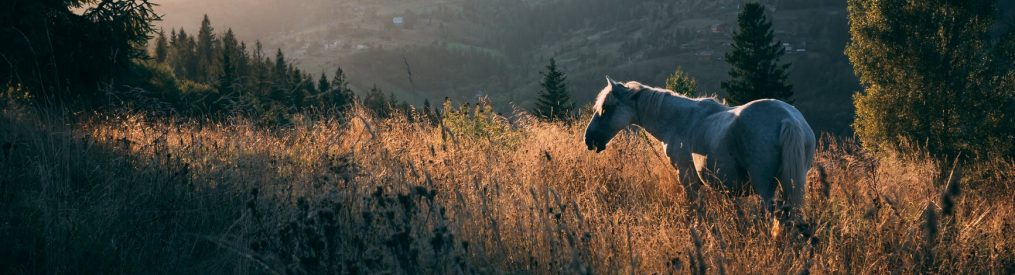
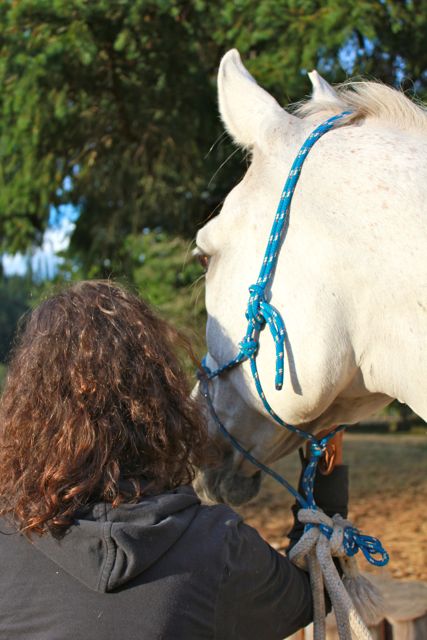
 Maynard's Pony Meadows, Vancouver

Maynard’s Pony Meadows, Vancouver
photo by Susan Gordon

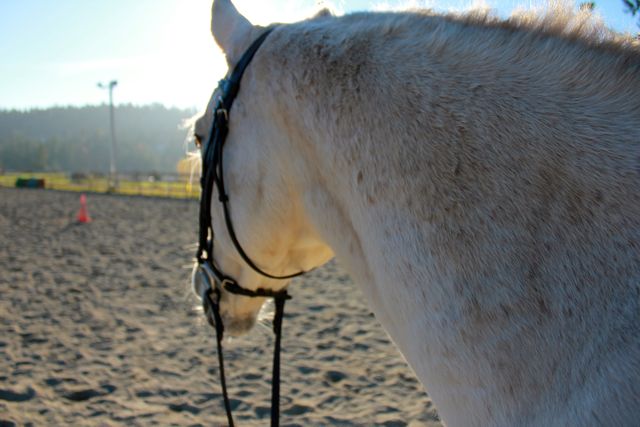
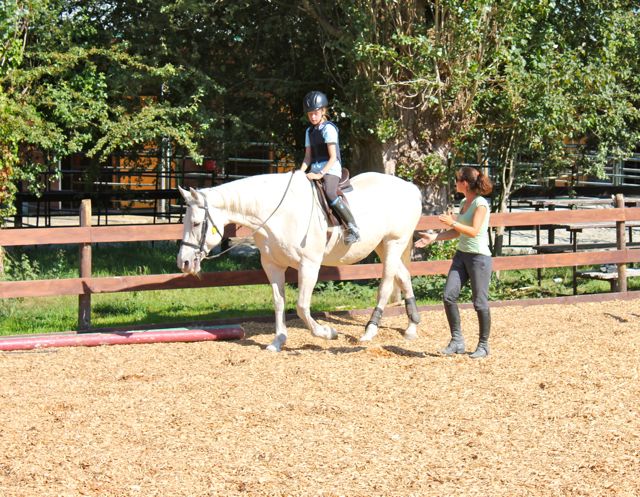
One of the hardest things for me to teach a rider was the “giving rein”.  As with the letting go of aspects of our lives we want to stay in control of, most riders have a difficult time giving the hand forwards, releasing contact with the rein even if only for a moment.

Of what benefit is this to the horse? As an instructor, when I’m watching from the ground and I see the precise moment the horse is ready to reach a little further into contact, lift his back and shoulders, lengthen his neck, relax the poll, and open up the stride without increasing tempo, I will tell the student “give the inside hand forwards”.  I want them to learn to feel this moment for themselves and respond at first consciously and then subconsciously as a conditioned response that instantly rewards the horse for his willingness to move forwards.

This concept is fundamental to the traditional training of horses that develops their ability to carry a rider through all gaits and all activities, building a stronger muscle-bridge across the topline, allowing the horse to remain as sound as possible for its entire working life.

So why would giving a rein forwards, gifting the horse with freedom and relaxation, be so difficult?

Dr. Schoen and I related this to the personal filters people maintain as they interact with their horses.  There is such a connection between the hand and the horse’s head and we often don’t realize how much of our emotional “stuff” we are relaying to the horse via rein tension and how it may be affected not only by the level of skill of the rider, but the degree of mindfulness in applying the various rein aids.  After all, the only thing the horse has to go by in reading the mood and instincts of the rider is the feel they are receiving through the rider’s body.  The horse is an instantaneous biofeedback mechanism and even more so when we are attached to it with a set of reins.

“Letting go”, when combined with the concept of “giving” is a very personal thing.  To be compassionate to yourself and “let go” of the parts of your life that need to be released can be considered a gift to yourself with no attachments or expectations of the outcome.  Simply observing the results will tell you what you need to know as a response to that exercise of “letting go”.

There may be many old imprints and programs in your psyche afffecting both you and your horse in a controlling kind of way that creates continued stress in both your life and your riding.  Dr. Schoen treats many horses who are so tight in the neck and poll from being held rigidly and not allowed to reach forwards and downwards into the rider’s hand.  I see the same thing in almost every horse I’ve worked with as well.

When a student finally softens their hand forward in just the right moment and just the right amount, and I see two beautiful beings working in instant joy and harmony, I see the true meaning of “giving”.  It is a very subtle, almost imperceptible moment of awareness that occurs between horse and rider, rider and themselves, and then extends back to other horses and riders at the barn and inevitably, everyone who encounters that rider and that horse in the other aspects of their lives.

As those special “letting go” and “giving” moments are increased and become part of the subconscious practice, first with the self, with the horse, and then recognized by others, they become the personality and identity of that person and compassion becomes central to their lives.  Everyone, everywhere benefits from that very fundamental, simple concept.

Giving does not have to involve a credit card, rushing around through a shopping mall, stressing over what to buy for whom or elaborate trinkets.  Sometimes it’s ourselves we need to give to, which could mean reflecting on concepts that are keeping us on a tight rein and preventing us from moving forward in life.  Give a smile to someone who needs it, give a bit of your time to help an elderly person with their groceries, and give your horse a pat on the neck.  What you actually receive in return may be the greatest gift, ever.
Reading You Loud and Clear

A number of years ago I was attending a clinic at a barn in Wellington, Florida.  The instructor was one of the best professional dressage riders and trainers in the U.S., and the weekend clinic was based on her program for training the rider as an athlete.  I was impressed at not only her kindness and awareness of her horses and every subtle nuance of the ride, but how authentic she was with the attendees.  She immediately felt like a friend.

We weren’t riding that weekend, but horses and riders were used to demonstrate the principles of her program, which some of the ladies attending had apparently assumed they could be certified for.  As it was made clear to them during the final session of the workshop that further training outside of the equestrian field would be needed to qualify for certification in this particular program, tension began to rise in the group as the instructor was being challenged.

From where I was sitting I had full view of the barn with the horses that were there in training for the winter show season.  Having seen several in the arena over the two days I knew how calm and quiet they were and how beautifully cared for each horse was.  The entire row of about 5 or 6 horses had their heads out the back windows of the stalls, watching the discussion group with great interest and ears pricked.  They knew their rider was part of the group too and were fixated in the direction of her voice.

As the disgruntled attendees became angrier and their voices rose, I could see the other participants growing more tense and most certainly the instructor was trying to finish up a great weekend on a positive note.  At the same time I noticed the horses becoming restless as well.  One of them started weaving, slowly swaying from side-to-side in its stall.

The other horses who had been watching with ears pricked and pleasant expressions also became more agitated.  The weaver picked up his rhythm, while the others now had their ears back and were obviously getting upset, yet they remained fixated on the group.

I stopped listening to what was being said as it was becoming quite an argumentative discussion and focussed instead of the reaction of the horses, also noticing that nobody else seemed to be aware of the change in their behaviour.  I pointed it out to the lady who was sitting next to me.  I always like to have a witness to confirm what I’m seeing when it comes to determining more esoteric circumstances like this 😉

I felt sorry for the instructor as we had gotten friendly over the weekend and communicated via subtle cues that genuine horsemen use to signal each other that we’re on the same page.  Much like the horses were doing in picking up the emotions being relayed by the upset women towards the rider they knew well, and who probably rarely, if ever, radiated such energy towards them.

I sensed that this was an unusual situation for these horses and it fascinated me to see them go from so calm and soothed to being obviously distressed by what they were seeing… or hearing… or sensing… perhaps engaging all of their herd instincts in feeling the negativity directed at their “herd leader”.  Maybe they wanted to rescue her from the apparent danger, and then bolt to where it would be safe from the “predators”.

As the group began to disperse my friend showed up to drive us back to the hotel and I didn’t have the chance to talk further to the instructor or see how the horses were after everyone else was gone.  I did note the one being ridden in the arena had become quite spooky however and thought maybe it had also picked up on the other horses in the barn and their level of stress.

It confirmed for me that horses who have been conditioned to exist in the company of humans think of us like being in the company of their own wild herds.  It’s very important to them and reinforces how much of our energy they actually pick up on.  It should remind us to be as calm and stress-free as possible when we’re around them if we want them to be that way as well.  The Principles of Compassionate Equitation are a program of personal development that will lead the rider through a series of exercises and awarenesses that will help in this aspect of enjoying our own horses by calming ourselves and alleviating stress-related reactions, and becoming mindful of the “global herd” that needs attention, care, and compassion as well.

at home on Salt Spring Island, B.C.

at home on Salt Spring Island, B.C.

Welcome to The Compassionate Equestrian!

Susan Gordon and Dr. Allen Schoen DVM extend a warm welcome to everyone who wishes to make compassion a part of their equestrian lifestyle.  By following the program we have developed, you will obtain the ability to reach a new paradigm of caring and expanded awareness in your chosen training and handling methods.

Image

The Compassionate Equestrian is the forthcoming book and guide to a heart-centered, science-backed program for everyone who rides and handles horses. It is based on The 25 Principles of Compassionate Equitation outlining the most current, peer-reviewed research studies that identify and support methods of training, handling, and caring for horses that constitute a safe, healthy, non-stressful and pain-free environment for equines, while encouraging their human counterparts to approach their training and handling with compassion and a willingness to alleviate suffering not only for their horses and themselves, but for the benefit of all living beings.